Every Schengen consulate asks for the same size of photograph, so the Schengen visa photo size is one frame whatever the destination: 35 mm wide, 45 mm tall, upright, a 7:9 rectangle. The German Missions in the United States list one recent biometric passport photo of 35 x 45 mm on their checklist; the Dutch government’s tourism checklist writes the same box as 3.5cm by 4.5cm. As a file, 413 × 531 pixels at 300 DPI or 827 × 1063 at 600.
Width and height start at 35 and 45 millimetres with 300 DPI, and the crop setting fills the frame, so a dropped portrait comes back finished, with the DPI recorded inside for the print counter. What the page cannot do is measure your head: the chin-to-crown rule is met by framing the picture first, explained below.
Before and after

2400 × 3600 px1.39 MBJPG
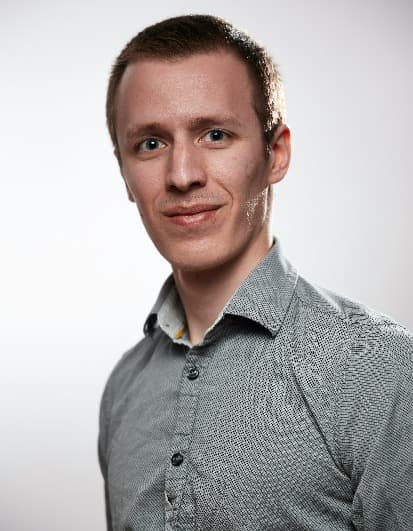
413 × 531 px64 KBJPG
The dashed frame on the left marks the part that fits the new shape. It was scaled to exactly 413 × 531 px, and the top and bottom outside the frame were trimmed.
The file went from 1.39 MB to 64 KB.
The image on the right is the actual file the tool above produced.
How to use it
- Pick a recent portrait taken straight on against a plain, bright wall; if it shows you to the waist, crop it first so head and upper shoulders fill the picture.
- Add it. The frame is already 35 × 45 mm at 300 DPI, so the resize runs as soon as the file lands.
- Check the preview: the face, chin to crown, should cover 70 to 80 per cent of the height, eyes a little above centre. Too much shoulder means the face is small; crop closer and try again.
- Download, or type 600 in the DPI box and press Resize for 827 × 1063 pixels, the print density on the German specimen sheet.
35 × 45 mm in pixels, and why the DPI is stored
35 mm is 1.378 inches and 45 mm is 1.772; multiply by the DPI and the pixels appear: 413 × 531 for 300 DPI, 827 × 1063 for 600, both printing at 35 × 45 mm. The German Missions’ specimen sheet wants the print on high-quality paper at a resolution of at least 600 dpi. That governs the printer, not the file, but the simplest way to match it is a 600 DPI file: type 600 before pressing Resize.
The DPI goes into the JPG or PNG. With nothing stored, a lab prints a 413 × 531 file at whatever density its software assumes, often 72 or 96; with 300 inside, it prints 35 × 45 mm, several copies to a 10 × 15 cm sheet. Ask for actual size, not fit to page.
The two checklists, in their own words
German Missions in the United States, Schengen visa checklist of April 2025: One (1) recent biometric passport photo (35 x 45 mm; see specimen photos). The linked specimen sheet sets the face at 70 – 80% of the photo, 32 – 36mm from chin to crown. Background one colour and bright, ideally a neutral grey, without pattern or shadow; expression neutral, mouth closed.
Government of the Netherlands, checklist for a Schengen tourism visa: a colour photo, no more than 6 months old, measuring 3.5cm by 4.5cm, against a white or light-coloured background. Applicants using an external service provider need no photo, because a digital photo will be taken at your appointment.
Placing the head, and what stays your job
The resize cuts equal strips from the long sides and scales what is left; it does not look for a face. At 300 DPI the 32 to 36 mm band is 378 to 425 of the 531 pixels. A camera-roll portrait usually gives the face under half the height, so crop it first from just above the hair to a little below the collar; the 7:9 preset then shaves only a sliver off a 3:4 picture.
Colour, light and background pass through unchanged, so stand a step from a plain light-grey or white wall facing a window, and do not reuse a photo older than six months. A 413 × 531 JPG weighs a few tens of kilobytes; if a portal sets a kilobyte limit, the KB reducer brings it under, at the cost of the stored DPI.
Frequently asked questions
- What is the Schengen visa photo size in cm, inches and pixels?
- One box, three spellings: 35 × 45 mm, 3.5 × 4.5 cm, roughly 1.38 × 1.77 inches. The pixel count follows the DPI: 413 × 531 at 300, the preset here, and 827 × 1063 at 600.
- Is the photo size the same for every Schengen country?
- Yes. The German and Dutch checklists above state the same 35 × 45 mm; what varies is the wording, background colour and number of photos, so read your own consulate’s checklist.
- How big should my face be?
- The German specimen sheet says 70 to 80 per cent of the photo, 32 to 36 mm from chin to crown, with 27 to 40 mm tolerated; children aged 9 and under may go down to 22 mm. This page does not measure that; frame the head on the crop page first.
- Do I need a printed photo or a digital file?
- It depends on the consulate: the German Missions checklist lists one biometric passport photo to hand in with the paper application; the Dutch checklist says an external service provider takes a digital photo at the appointment. A print comes from this file at a photo counter; a portal that asks for an upload takes the same JPG.
- Can I wear glasses or a head covering?
- The German specimen sheet wants the eyes clearly visible: no flash reflection off the lenses, no tinted lenses or sunglasses, no frame edge across the eyes. Hats and head coverings are not permitted except for religious reasons, and then the face must show from chin to forehead.
- Can I use my Indian passport photo for a Schengen visa?
- Same 35 × 45 mm frame, different fill: Passport Seva asks for the face to take up 80-85% of the photograph on a white background, while the German sheet wants 70 – 80% and prefers a neutral grey. A studio file under six months old can be re-cropped here.